Pork Barrel Politics: Definition, Impact, and Pathways to Reform

Pork Barrel Politics: Definition, Impact, and Pathways to Reform
Unpacking the "Pork Barrel": Understanding a Divisive Political Practice
In the intricate world of politics, few terms spark as much debate and disdain as "pork barrel politics." It conjures images of wasteful spending and backroom deals, yet it remains a persistent feature of legislative processes worldwide. But what exactly is pork barrel politics, what are its far-reaching consequences, and how can we genuinely reform a system that often seems to defy accountability? This article dives deep into the heart of this contentious practice, exploring its definition, dissecting its multifaceted impact, and examining potential avenues for meaningful reform.
What Exactly is Pork Barrel Politics?
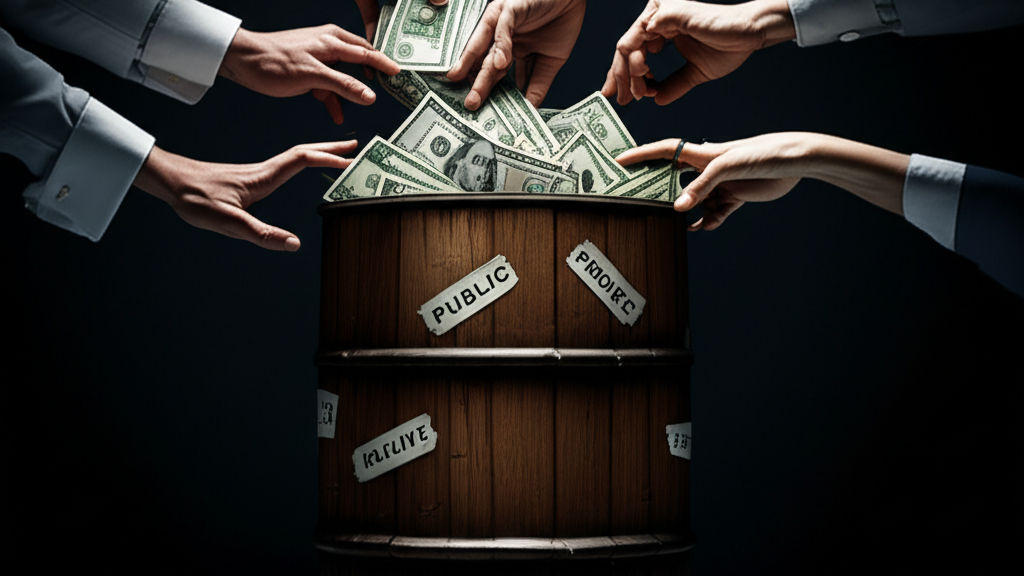
At its core, pork barrel politics refers to the practice by which politicians secure government funding for localized projects or programs that primarily benefit their constituents, often in exchange for political support, votes, or campaign contributions. These projects are typically inserted into larger, unrelated legislative bills, allowing them to gain approval without the usual scrutiny or oversight that standalone bills might receive. While the benefits of such projects are concentrated in a specific area, their costs are spread among all taxpayers.
The Etymology of "Pork Barrel"
The colorful term "pork barrel" has a fascinating origin, dating back to 19th-century American English. It's an allusion to the practice of plantation owners distributing barrels of salted pork to enslaved people, who would often compete for their share. Over time, this metaphor evolved to describe public funds being distributed to legislators' districts, becoming a derogatory term for congressional spending that prioritizes localized benefits over broader national policy objectives. The Oxford English Dictionary dates the modern sense of the term to 1910.
Earmarks vs. Riders: A Closer Look
While "pork barrel" is often used colloquially, the specific mechanisms through which it operates are typically "earmarks" and, less commonly, "riders."
- Earmarks: These are provisions written into appropriations or spending bills that specifically allocate funds for a particular project, program, or organization. They direct a precise amount of money to a specific entity or project within a legislator's jurisdiction. Earmarks can bypass competitive review processes and are frequently criticized for lacking transparency. For instance, a provision for a specific bridge in a senator's home state or a research grant for a university in a representative's district would be considered an earmark. After a temporary ban in 2011, earmarks were reinstated in the U.S. Congress in 2021, albeit with added transparency requirements and rebranded as "community project funding."
- Riders: Less direct than earmarks, riders are often unrelated provisions added to a bill that might not pass on their own merit. While a rider could include a pork barrel earmark, the term "rider" generally refers to any extraneous amendment attached to a bill to ensure its passage or, conversely, to sabotage it.
The fiscally conservative nonprofit Citizens Against Government Waste (CAGW) annually publishes "The Congressional Pig Book," documenting pork barrel projects that meet specific criteria, such as serving a limited population or special interest, not undergoing competitive bidding, or circumventing established budgetary procedures. In fiscal year 2022, CAGW identified 7,396 earmarks costing approximately $26.1 billion.
The Far-Reaching Impact of Pork Barrel Spending
The consequences of pork barrel politics extend far beyond the immediate financial cost, affecting economic efficiency, public trust, and the very fabric of democratic governance.
Economic Inefficiency and Waste
One of the most significant criticisms of pork barrel politics is its contribution to economic inefficiency and wasteful spending.
- Misallocation of Resources: When funds are directed based on political considerations rather than genuine need, projects may not align with long-term development goals. This can lead to a waste of taxpayer money on projects that are not economically or socially viable.
- Inflated Budgets: The inclusion of projects with questionable necessity can substantially inflate the overall cost of legislation, contributing to budget deficits. For example, the "Big Dig" highway project in Boston, initially estimated at $2.8 billion, ultimately cost over $14 billion, becoming an infamous example of excessive government spending.
- Lack of Scrutiny: Because pork barrel projects are often slipped into larger bills, they frequently avoid the rigorous congressional scrutiny and oversight that would typically apply.
Distorted Priorities and National Interest
Pork barrel politics can shift the focus from national priorities to local or partisan gains.
- Neglecting Crucial Needs: This can result in vital national needs, such as defense, education, or healthcare, being neglected or underfunded in favor of localized projects that serve a narrower interest.
- Political Favoritism: The distribution of funds can be influenced by personal connections and political favors, rather than objective criteria or national interest.
Erosion of Public Trust
The lack of transparency and accountability inherent in pork barrel politics often erodes the trust between citizens and their elected representatives.
- Perception of Corruption: Citizens may perceive that politicians prioritize their own interests, political gain, and re-election prospects over the public good, leading to resentment and apathy.
- Undermining Democracy: This cynicism can weaken democratic institutions and contribute to a crisis of faith in the political system itself.
Fueling Political Gridlock and Special Interests
While proponents argue that earmarks can facilitate political bargaining and cooperation, critics contend they can also exacerbate gridlock and entrench special interests.
- Logrolling: Pork barrel legislation is often passed through "logrolling," where lawmakers agree to support each other's pet projects, even if they don't individually support each project on its own merits. This can lead to convoluted budgets filled with unnecessary spending.
- Influence of Special Interests: The process can be heavily influenced by special interest groups and major campaign contributors who lobby for specific earmarks.
The Counter-Argument: When Pork Isn't All Bad?
Despite the pervasive negative connotations, some argue that pork barrel spending can serve legitimate purposes.
- Addressing Local Needs: Supporters contend that earmarks help address specific local needs that might otherwise be overlooked by broader national legislation.
- Facilitating Legislation: Earmarks can act as a "greasing mechanism" to build coalitions and secure votes for the passage of broader, more important legislation. Without them, some argue, it could be even harder to pass complex bills in a divided legislature.
- Promoting Accountability (Potentially): By directly allocating funds to specific projects, politicians can be held accountable for their promises to constituents, fostering a degree of transparency in what resources they "bring home."
However, even these arguments are often met with skepticism, with critics pointing out that the same economic stimulation could be achieved through more balanced spending, and that the potential for abuse often outweighs the benefits.
Pathways to Reform: Reining in Pork Barrel Politics
Given the contentious nature and significant drawbacks of pork barrel politics, various reforms have been proposed and, in some cases, attempted.
1. Enhancing Transparency and Accountability
A cornerstone of reform efforts is increasing the visibility of how public money is spent.
- Publicly Available, Merit-Based Criteria: Requiring all government grant programs to have clear, publicly available, and merit-based selection criteria.
- Detailed Justification for Earmarks: Mandating that legislators provide detailed justifications for proposed earmarks, including economic feasibility tests or cost-benefit analyses, and ensuring these are subject to public review.
- Online Databases: Establishing user-friendly public websites that detail the amounts and recipients of all government contracts, grants, and financial assistance. This allows citizens to track how their tax dollars are being spent.
- Member Identification: Requiring members of Congress to publicly attach their names to the earmarks they request. The U.S. Congress reinstated earmarks in 2021 with this and other transparency rules, such as banning funding for for-profit organizations.
2. Strengthening Independent Oversight Bodies
Independent bodies can play a crucial role in scrutinizing spending and identifying misuse.
- Anti-Corruption Commissions: Establishing or strengthening independent anti-corruption bodies with powers to investigate and hold politicians accountable for misuse of public funds, even if not technically illegal.
- Robust Audits: Implementing stringent and comprehensive audits of allocated funds to ensure compliance with rules and evaluation based on real needs and returns on investment.
3. Line-Item Veto Power
A "line-item veto" allows a chief executive (like a president or governor) to reject specific provisions or "line items" within a bill, typically an appropriations bill, without vetoing the entire legislative package.
- Fiscal Discipline: Proponents argue it's a vital tool to eliminate wasteful or unnecessary expenditures, thus promoting fiscal discipline.
- Historical Attempts: In the U.S., President Bill Clinton had this power from 1996 to 1998, using it to strike individual budget items, but it was ruled unconstitutional by the Supreme Court in 1998 as it violated the separation of powers. However, 44 U.S. states currently grant their governors some form of line-item veto power. Proposals to reinstate a constitutional line-item veto at the federal level continue to surface.
4. Educating the Public and Encouraging Engagement
An informed citizenry is key to demanding accountability.
- Media and Advocacy: Continued media scrutiny and advocacy from watchdog groups, like Citizens Against Government Waste, help raise public awareness about specific instances of pork barrel spending.
- Voter Demand for Accountability: Encouraging voters to scrutinize how their elected representatives spend public money and to hold them accountable at the ballot box for wasteful practices.
5. Promoting Bipartisan Cooperation and Shared Responsibility
While often framed as a partisan issue, pork barrel politics is utilized by politicians across the political spectrum.
- Shifting Incentives: Reforming the legislative process to incentivize broader national interests over narrow parochial ones. This could involve increasing local cost-sharing for projects to force legislators to internalize more of the costs.
- Congressional Leadership: Congressional leaders can play a role in limiting the types of projects that can be earmarks and prioritizing higher-quality projects.
Conclusion
Pork barrel politics, with its long history and deep roots in legislative practice, presents a complex challenge to good governance. While it can sometimes be rationalized as a necessary lubricant for legislative compromise or a means to address critical local needs, its propensity for fostering economic inefficiency, distorting national priorities, and eroding public trust is undeniable. Meaningful reform requires a multi-pronged approach that emphasizes radical transparency, strengthens independent oversight, empowers executives with tools like a constitutional line-item veto, and, most importantly, cultivates an engaged and informed public demanding accountability from their elected officials. By understanding the intricacies of this divisive practice, we can collectively push for a political system that truly serves the public interest, rather than just the "pork barrel."